

I’m not the most active person on LinkedIn, more of a quiet observer who scrolls now and then. I do make new connections occasionally (selectively, of course). At the risk of upsetting some people, LinkedIn can sometimes feel like a stage where many are more interested in “showing off” than sharing real insights or adding value.
One person I always make a point to follow is Denise Chisholm. Her insights are consistently outstanding, often making me pause, think, and challenge my own views. Here is another timely update from her.
Here is a section:
If last week’s discussion was about whether another rate hike should worry investors, the next question is whether it should change make them consider changing what they own. The argument for making a defensive shift is easy to understand.
Tighter policy is often associated with slower growth, slower growth is often associated with traditionally defensive sectors such as Utilities, Consumer Staples, or Health Care, and the conclusion can seem obvious. The challenge is that there has never been a single playbook for Fed hiking cycles because every cycle is different.
For anyone who grew up settling childhood disputes with rock-paper-scissors, markets work much the same way. There is no always-winning move. Policy is only one hand being played alongside earnings, valuations, and sentiment. Those forces take turns driving market leadership, which is why investing rarely comes with a simple playbook.
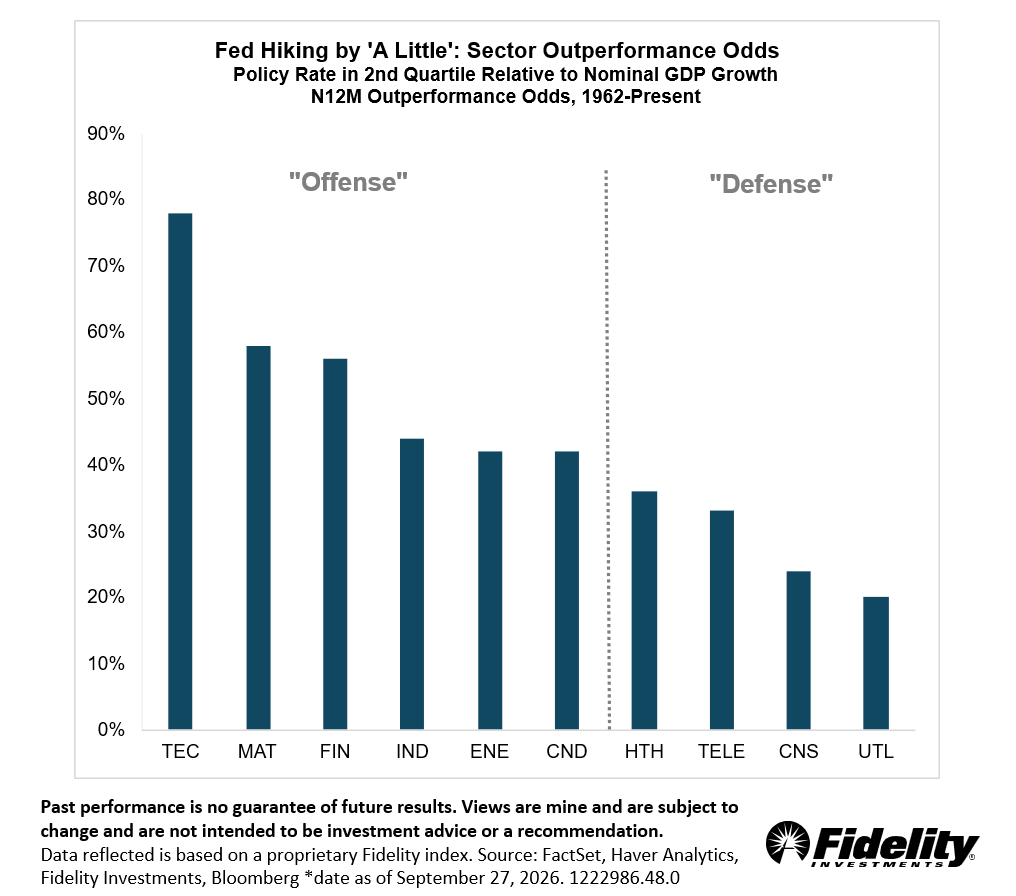
That said, we can use the framework we have been building over the last several weeks to ask a more specific question: when nominal interest rates begin below nominal growth and the Fed responds with modest hikes, does leadership tend to favor offense or defense?
The historical answer is surprisingly clear: offense. Technology has historically been the strongest performer in these environments, outperforming the broader market nearly 80% of the time. That result is consistent with a theme we have highlighted throughout this series: rate hikes often occur alongside improving growth expectations, and improving growth has historically mattered more than modest changes in policy (call it rock beating scissors).