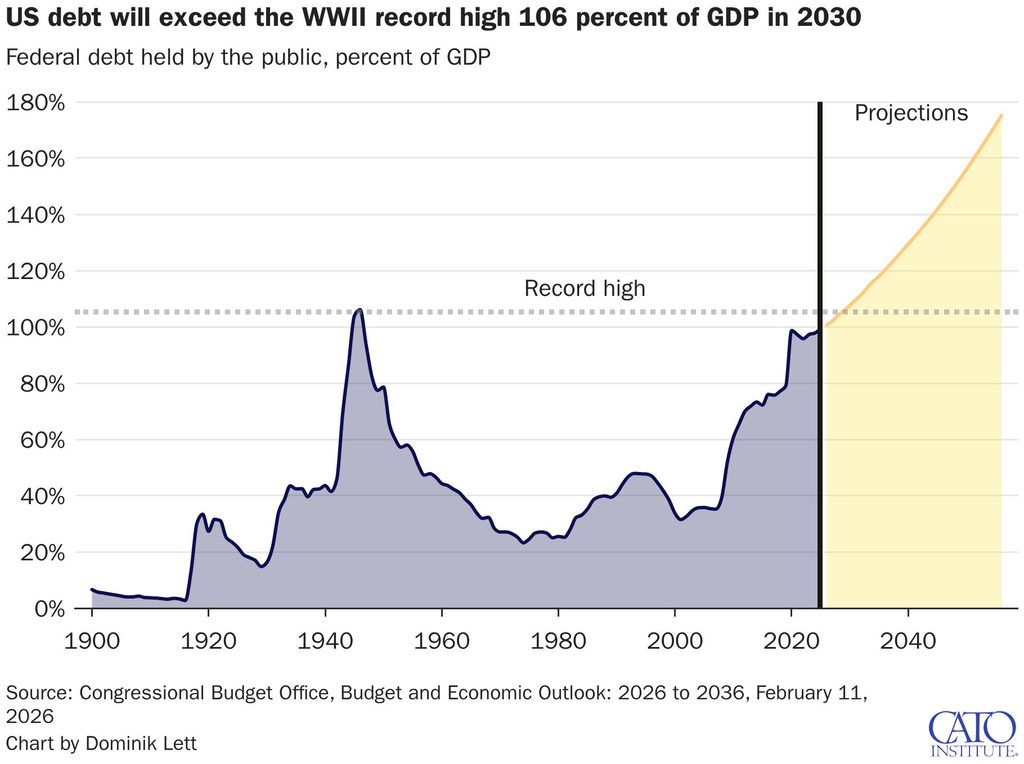
I was explaining to an investor recently why I think the real American problem is not necessarily the economy or the stock market. It is debt.
The US federal debt has already surpassed USD40 trillion and the fiscal deficit so far this year is around USD1.8 trillion. At some point, you do not need a particularly bearish view to recognize that the numbers are becoming difficult to ignore. I told him it is really just a matter of arithmetic.
The more debt the US government issues, the more Treasury securities the market has to absorb. If demand does not keep pace, investors will want higher yields. Higher yields mean higher interest costs which add to future deficits and yes more borrowing. In other words, the debt has started to feed itself.
We then talked about the Treasury’s decision to double its long-end bond buybacks to USD4 billion. Officially, the objective is to improve liquidity in the longer-dated Treasury market. Fair enough.
If yields continue rising, the cost of financing America’s debt becomes increasingly painful. If the Treasury becomes more aggressive in trying to hold yields down, the market may eventually ask a different question: are real yields high enough to compensate investors for inflation, future deficits and the growing fiscal risk?
Either way, the underlying problem has not gone away. That is why I’m increasingly looking at gold differently. Not simply as a hedge against inflation, but as a hedge against the difficult choices a heavily indebted government will eventually have to make.
You do not need to predict a crisis. You just need to recognise that when the debt gets large enough, eventually the mathematics joins the conversation.