For anyone who missed it, Leopold Aschenbrenner’s fund, Situational Awareness, reportedly peaked at close to USD45 billion before losing roughly 67% in July. The trade was essentially long AI infrastructure, short parts of software, and reportedly running at close to four times leverage. It worked spectacularly well until it did not.
Then the longs cracked, parts of the short book went the wrong way too, and the prime brokers started making the sort of phone calls nobody wants to receive. By Thursday, Citadel had stepped in to buy the bulk of the fund’s roughly USD16 billion public-equity portfolio in what appears to have been a very hurried transaction.
In case you want to know, the fund is reportedly still up around 80% for the year. That should probably worry people more than the collapse itself.
You can be broadly right about the trade, make an extraordinary amount of money, run it at four times leverage, and still end up explaining yourself to your prime broker during your wedding week.
Being right was never the hard part. Staying solvent long enough to be right was. I have written before about the “buffalo jump” — the way markets do not always fall gently. They stampede and the ones at the front of the herd can get trampled by those behind them who panic a little faster.
Aschenbrenner did not need the whole market to turn against him. He only needed enough of his own book to turn, at leverage, with brokers watching the marks in real time. Once the margin calls start, your view on where Nvidia or the AI infrastructure trade might be in three years becomes somewhat less important.
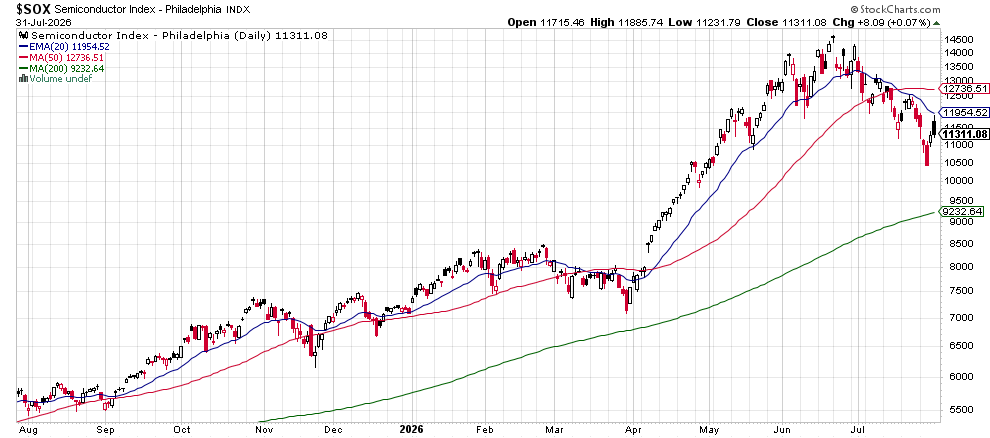
Now, the message I actually want to land. I believe this episode contributed to some of the high volatility we have all been feeling in AI names and related semiconductor stocks over the past couple of weeks. Phew! It did not crash the market.
A forced unwind involving roughly USD16 billion of public equities over a short period will absolutely leave fingerprints on the price action of the names involved. It can trigger stop-losses, force other leveraged players to reduce risk and turn what begins as ordinary selling into something much uglier.
Keep calm and carry on. So what am I doing while the bears are dancing on the ceiling? I’m not selling into this. I remain selective, and I am accumulating some of the names we already like where the recent weakness looks more technical than fundamental.
That does not mean every AI stock is cheap. It simply means that price and fundamentals occasionally become disconnected when somebody, somewhere, has to sell rather than wants to sell. Enough for now!