
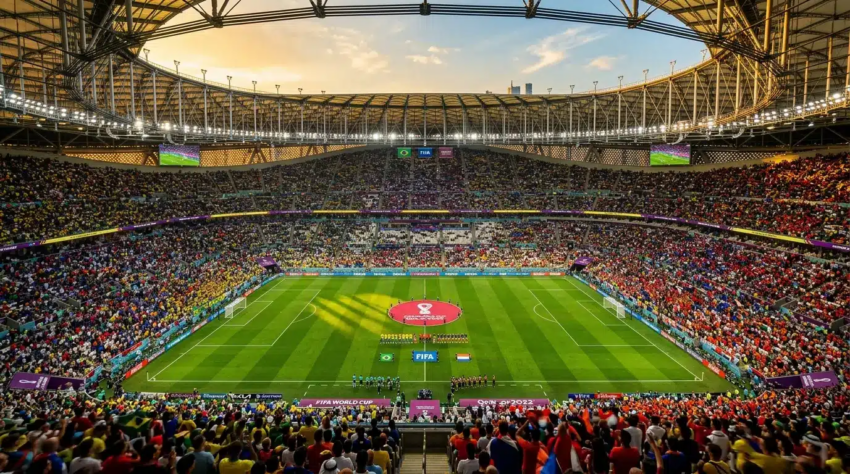
Like billions of people around the world, I have been following the FIFA World Cup and after 30 years in the industry, however, I have realized I have an occupational hazard. Whatever I’m watching, I somehow end up relating it back to investing.
Watching the tournament has reminded me that football and investing share more similarities than most people realize. Before a ball is even kicked, analysts predict the champion, bookmakers publish their odds, and fans confidently explain why their team will lift the trophy.
The investment industry behaves in much the same way. At the beginning of every year, investment banks on Wall Street publish their forecasts, economists predict growth and inflation, and strategists estimate where markets will finish by year-end. Well, everything sounds logical until reality has other ideas.
The World Cup has a habit of producing surprises. An underdog eliminates one of the favourites, an injury changes the balance of a match, or a single refereeing decision alters the course of the tournament.
Financial markets behave no differently. Every year brings events that few investors anticipated, whether geopolitical tensions, policy surprises or technological breakthroughs. Experience has taught me that the future is rarely as predictable as the experts would have us believe. Rather than trying to forecast every twist and turn, I prefer building portfolios that can adapt to different market environments.
Another lesson comes from the goalkeepers. The headlines naturally belong to the players who score spectacular goals, yet every championship-winning team also depends on someone quietly preventing disaster at the other end of the pitch.
Investing works much the same way. Investors naturally focus on returns, but avoiding large losses is often just as important as generating gains. Over the long run, protecting capital gives a portfolio a much better opportunity to compound steadily.
The World Cup also reminds us that championships are rarely won by individual brilliance alone. The teams that go furthest are usually disciplined, balanced and adaptable, rather than simply relying on one or two superstars.
Portfolio construction follows the same principle. Diversification quietly protects investors through countless market cycles.
The biggest difference, however, is that the World Cup lasts only a month, while investing lasts a lifetime. Building wealth rarely comes from one spectacular decision. It comes from managing risk, staying disciplined, remaining patient and allowing the power of compounding to work over many years.
So enjoy the football, cheer for your favourite team and debate the referees if you must. Just do not manage your investment portfolio with the same emotions you experience during a penalty shootout.