

Over coffee this week, some friends and partners brought up the latest memorandum or peace deal between the US and Iran. As expected, opinions were plentiful and certainty was in short supply.
“Oh really?” a partner remarked when the agreement was described as a major victory for Trump. Another had actually taken the trouble to read parts of the document and wondered aloud whether we were all reading the same memorandum.
The discussion became more interesting once we moved beyond the headlines. The agreement appears to include support for Iran’s economic rehabilitation, the gradual removal of sanctions, and the release of certain frozen assets. In simple terms, after spending enormous sums on a conflict, the US may now find itself helping to finance part of the rebuilding effort.
That prompted a fair question from across the table. “If that is victory, what does defeat look like?” Another partner pointed out that the story is probably not that simple. In my view, Trump is certainly aware that the optics are not particularly favorable. Declaring victory is one thing. Convincing everyone else is another.
To be fair, geopolitics is rarely as simple as keeping score in a football match. Governments pursue multiple objectives simultaneously, many of which are not immediately obvious to the public.
What appears to be a concession today may be viewed as a strategic gain years later. Equally, what is celebrated as a triumph today may age less gracefully.
As investors and traders, however, our interest is less about deciding who won the argument and more about understanding the consequences. Will this reduce tensions? Could it improve regional stability, or simply postpone future disagreements? These are the questions that matter. Yeah, one of the charts we looked at during the discussion was oil. Let the oil flow, baby!
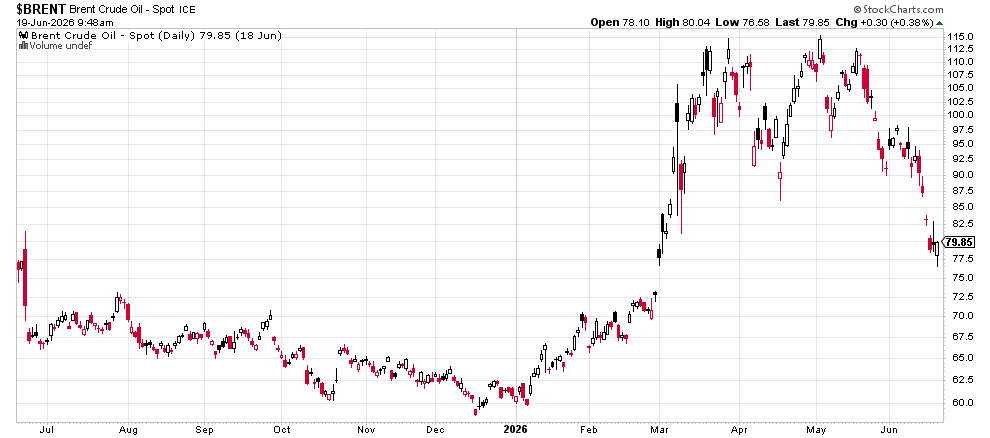
So, who won? By the time the coffee cups were empty, nobody had managed to agree on whether the memorandum represented a victory, a compromise, or simply an expensive exercise in diplomacy.
One thing, however, drew unanimous agreement. The gap between political headlines and reality can sometimes be wider than the distance between Washington and Tehran. As markets often remind us, reality eventually gets the final vote.