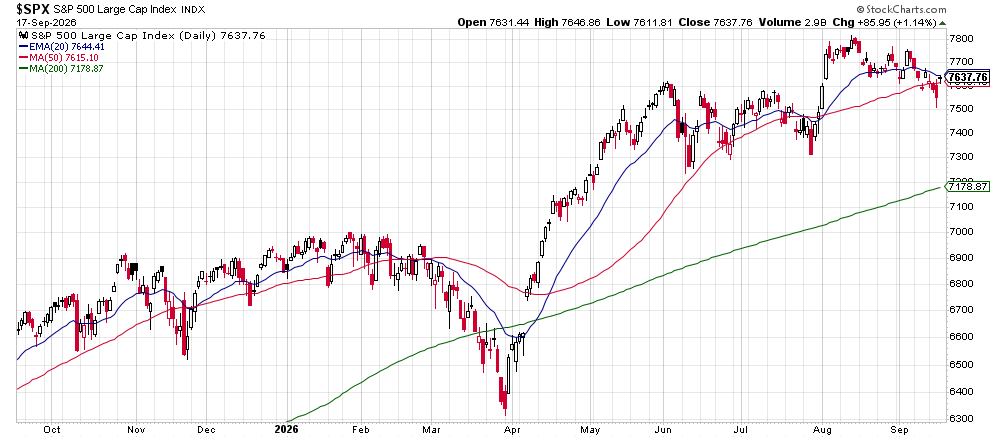
The Federal Reserve raised its benchmark rate by a quarter point to a range of 3.75%-4.00% which came as no surprise to investors. Fed funds futures had put the probability of a hike at better than 90%. Variable-rate borrowers will feel it relatively quickly while those with fixed-rate mortgages will be largely insulated from the immediate impact.
Oh really? Despite being President Trump’s own choice for the role, Warsh made it clear that he is willing to stick to the Fed’s inflation mandate. Yeah, Trump was certainly not pleased.
US stocks fell but long-term bond yields did not come down as some of us would have expected. The 10-year yield closed at 5.02% while the 2-year yield, a useful proxy for where investors see the Fed funds rate down the road, rose to 4.74%.
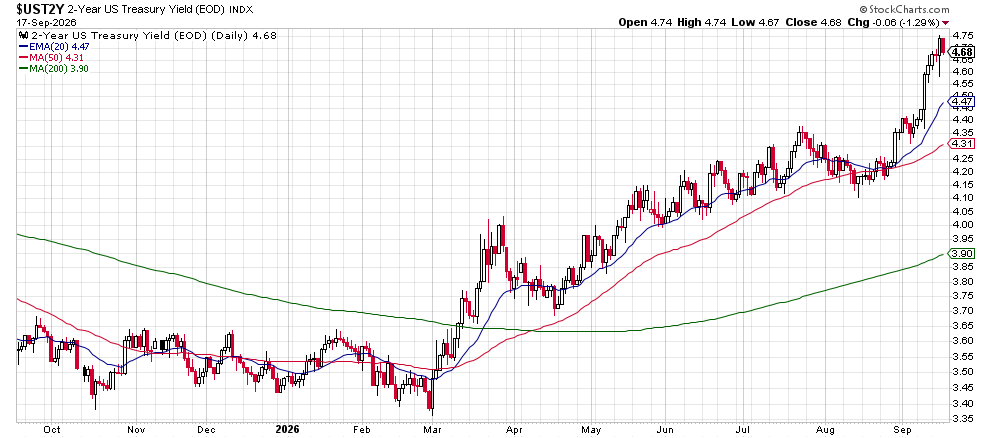
If investors had viewed this as the final tightening move before an eventual pivot, you would normally expect longer-term yields to ease. Instead, the bond market went the other way. For months, yields had been sitting below the Fed’s own guidance effectively betting that the Fed would blink first. That bet is looking less comfortable now.
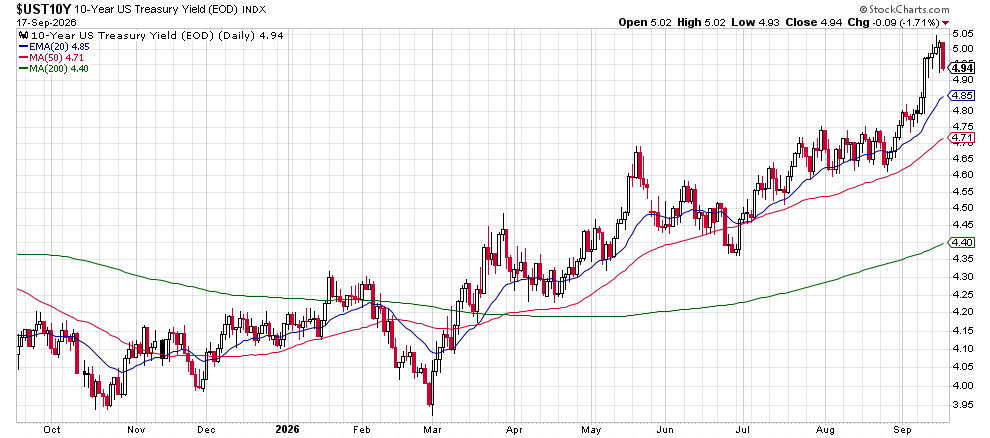
Is this the start of something Scott, America’s chief bond salesman? The Fed controls the short end of the curve but the long end has a mind of its own and lately it has been making its views rather clear.
For investors especially those sitting on leveraged positions, the message is simple: do not get too comfortable. Higher yields, sticky inflation and uncertainty over the Fed’s next move could keep markets unsettled for a while. Prepare for more volatility.
The good news? The bull market is still intact. Since today is Friday, I thought I should end the week by saying something positive.