

“You have been brought here from all over the country for one reason. Stare fear in the eye as you compete for $50,000. To win the money, you have to complete three extreme stunts. Stunts not only test you physically, but mentally. If you are too afraid to attempt this stunt, you are eliminated.”
Any one of you who is old enough can remember these catchphrases from the American stunt/dare game show Fear Factor designed to test both the mental and psychical strength of mostly young people in order to compete for a $50,000 cash prize.
It was one of my favorite TV shows many years ago. It was always fun watching from the safety of my couch, thinking, “Would I be able to do that?” Joe Rogan’s hosting added a mix of humor and intensity that made the show even more entertaining.
Watching it again recently reminded me that investing is not all that different. Markets do not ask us to jump off helicopters or eat insects, but they do test our emotions. One month ago, investors were feeling greedy. Today? Extreme fear.
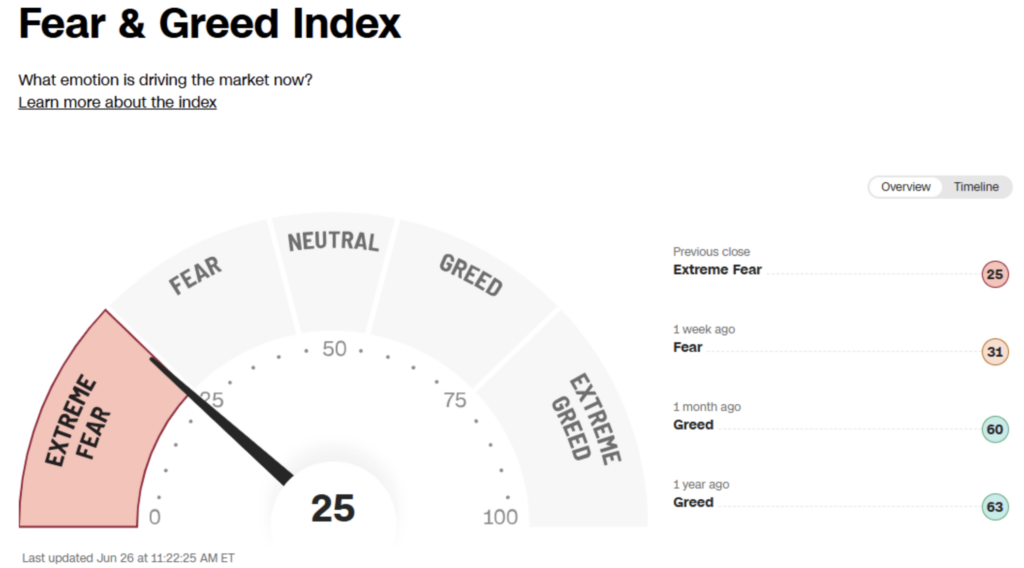
US equities delivered another mixed week. AI-linked cyclicals continued to show resilience, while the mega-cap technology names and semiconductor stocks reminded everyone that markets rarely move in straight lines. The catalyst was a sharp sell-off in South Korea’s KOSPI, which triggered profit-taking across technology and semiconductor names globally.
Excitable retail investors should remember that leveraged ETFs don’t predict the market, they simply turn up the volume on whatever tune it is already playing, often amplifying both momentum and short-term volatility. Leveraged ETFs are not for the faint-hearted.
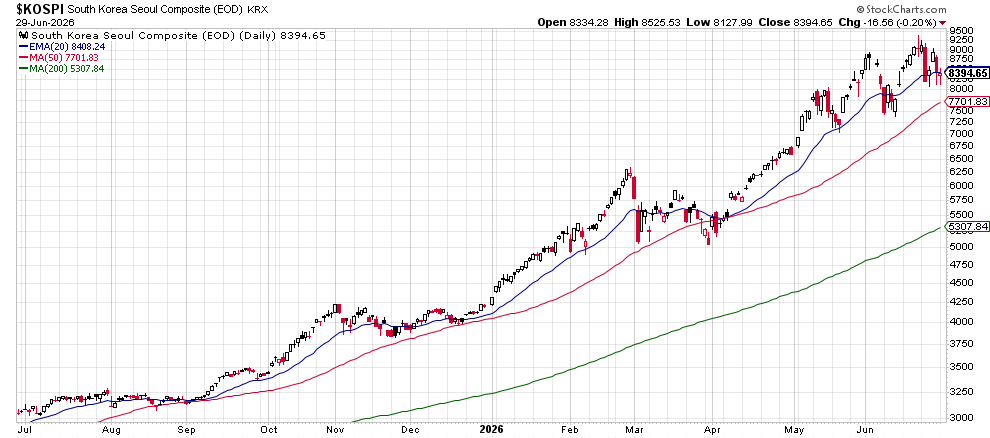
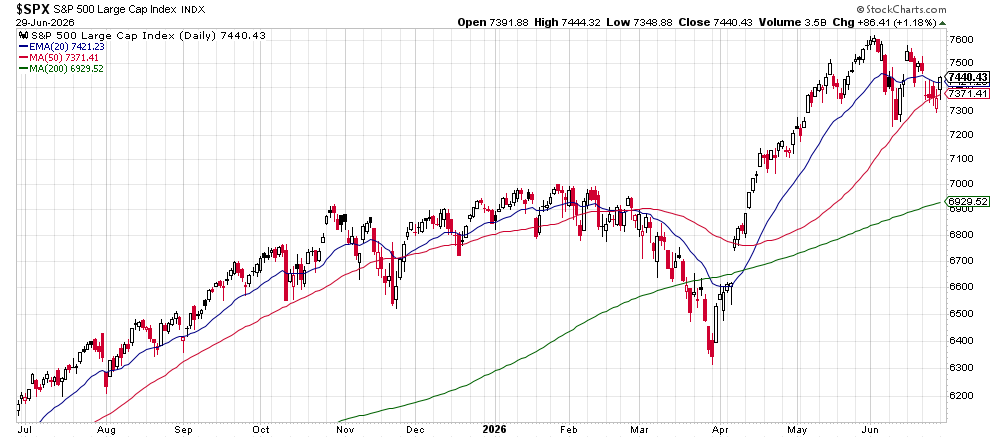
As anticipated, Wall Street experienced its June “correction.” In reality, it was less about the market falling apart and more about leadership changing hands beneath the surface, a distinction that many headlines overlooked. Against this backdrop, I have continued to selectively accumulate certain positions.
Meanwhile, the Middle East has quietly slipped off the front page. That does not mean the risks have disappeared. The 60-day ceasefire remains fragile and negotiations are likely to drag on for months. However, the probability of a meaningful escalation before the US midterm elections remains relatively low.
Markets will always find reasons to swing between optimism and pessimism. Investors, unfortunately, tend to swing with them. The challenge is controlling our emotions when everyone else is losing theirs. That, in my experience, remains one of the most valuable investment skills.