

As part of my routine work, I keep track of the trades generated from one of my trading models for those with a higher risk appetite. The model is not designed to predict the future with perfect accuracy.
If that were possible, markets would probably be a much quieter place and many of us would have retired earlier. Instead, it provides a structured framework for navigating the uncertainty that defines financial markets.
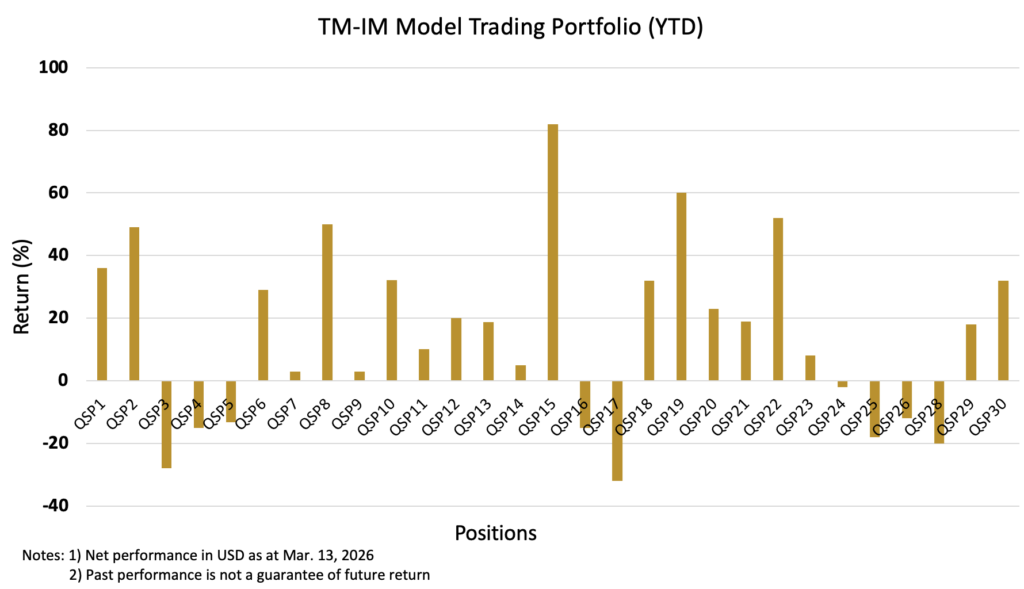
So far in 2026, the model has produced 29 trades, with results that have been encouraging. The win rate currently sits close to 70%, meaning roughly seven out of ten trades have generated positive returns. In trading terms, that is already a respectable batting average.
Another encouraging feature is the payoff structure. The average gain from winning trades has been meaningfully larger than the average loss from losing trades. In simple terms, when the model gets it right, it tends to capture meaningful moves, while losses are generally contained.
There have also been several strong upside outliers. A number of trades delivered gains above 50%, with one position producing a return of more than 80%. As is often the case in trading, a handful of good opportunities can do a lot of the heavy lifting.
Interestingly, the Iran war which has been unsettling global markets has actually benefited some of the positions established earlier this year. That was not exactly part of the original plan but hey, markets occasionally have their own way of rewarding positioning that happens to align with unfolding events.
Of course, the path has not been perfectly smooth. There were periods where a cluster of trades produced losses, which is simply part of the game. The objective is not to eliminate losses entirely because that would require supernatural abilities. It is about maintaining a structure where risk is controlled and positive opportunities can accumulate over time.